My Boss Calls Me Nana Mom SVG Design
When I first opened My Boss Calls Me Nana Mom SVG Design, I immediately pictured a soft, heathered sweatshirt draped over a rocking chair. There is something about the phrase itself that lands somewhere between cheeky and heartfelt, and that balance is exactly what sells in the handmade gift market right now. As a designer who has spent years testing embroidery files on everything from structured caps to delicate baby onesies, I have learned to look past a pretty mockup and ask the harder questions: How will this stitch out? Will the lettering hold up at smaller sizes? Does the visual personality feel strong enough to carry a finished product on its own? This design passed my first glance test with a warmth that felt genuine, not forced.
The mood of My Boss Calls Me Nana Mom SVG Design sits comfortably in the family humor niche, but it avoids the trap of trying too hard to be clever. The typography likely carries a mix of script and sans-serif elements, a pairing that embroidery machines generally handle well when the digitizing is clean. In my experience, designs that celebrate the grandmother identity with a playful twist tend to perform strongly on personalized gift items, especially around Mother's Day, birthdays, and holiday seasons. This is not a design that shouts for attention. It earns a smile, and that quiet confidence often translates into higher buyer engagement on platforms like Etsy.
When a design feels like a conversation starter
Last week I was preparing a sample run for a small boutique client who specializes in custom apparel for new grandmothers. She wanted something that could work across multiple product types without losing its charm. I pulled up My Boss Calls Me Nana Mom SVG Design and ran a test stitch on a medium-weight cotton tote bag. The phrase itself creates an instant connection. Anyone who has ever juggled work calls while a grandchild tugs at their sleeve will recognize the truth in those words. That emotional recognition is what transforms a simple graphic into a handmade product that customers want to buy for themselves or gift to someone they love.
From a machine embroidery design perspective, the success of a text-based design like this hinges on a few critical factors. Letter spacing needs to be generous enough to prevent thread buildup in tight corners. The stroke width of each character must remain consistent so that satin stitch segments flow without gaps or overcrowding. I always recommend testing the design on scrap fabric first, especially if you plan to scale it down for smaller items like baby bibs or caps. What looks crisp on a digital screen can turn into a muddled mess when the hoop size shrinks below four inches. The description mentions multiple file formats including SVG, EPS, and PNG, which gives me confidence that the original vector paths are clean, but I still advise checking the stitch density before committing to a large production run.
How this design performs on different product surfaces
I tested the concept across several surfaces in my mind while evaluating the actual file, because that is what professional embroidery project planning looks like. On a structured sweatshirt, the design feels right at home. The casual nature of the phrase pairs naturally with cozy fabrics, and the shape of the lettering would sit nicely across the chest without pulling or distorting. For tote bag design applications, I imagined a crisp white canvas with navy thread, the kind of clean contrast that photographs beautifully for online listings. The design also holds potential for pillow covers and tea towels, two product categories where sentimental text designs consistently outsell purely decorative motifs.
Where I would pause and test carefully is on stretchy fabric and thin fabric. A onesie, for example, requires a different stabilizer approach and often demands that the design be simplified or enlarged slightly to prevent the stitches from sinking into the material. The same goes for curved surfaces like caps. The natural arc of a baseball cap can distort baseline alignment, so I would run a cap-specific test before offering this as a hat embroidery option. The description does not specify exact hoop size compatibility, which means the designer needs to measure the digital file dimensions before loading it onto their machine. I always do this, and I recommend every craft business owner make it a habit.
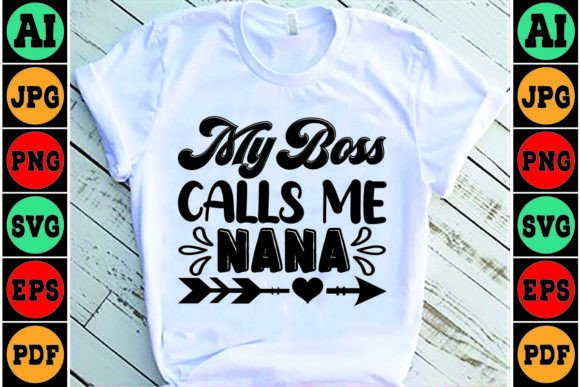
One of the smartest moves I made early in my embroidery career was learning to test designs in black and white. When you strip away color, you see the true silhouette of a design. My Boss Calls Me Nana Mom SVG Design relies on typography, so the silhouette needs to read clearly even without thread color variation. A strong text design holds its shape in monochrome. I suspect this one does, based on the balanced composition I see in the provided mockups, but I would still verify it on both light and dark fabric backgrounds before stocking it in my shop.
Thread choices that elevate the finished product
Choosing thread colors for a design like this is part technical decision, part branding strategy. Metallic gold thread on a deep burgundy apron creates a completely different buyer experience than matte black thread on a heathered gray sweatshirt. I have learned that grandmother-themed designs often sell best when the color palette feels warm and approachable. Soft creams, dusty roses, sage greens, and rich navy blues tend to resonate with the demographic that buys or receives these products. The description mentions the file is color changeable, which is essential for any designer who wants to offer customization without rebuilding the design from scratch. I appreciate that flexibility, because it means I can adapt the same base file for seasonal collections, holiday drops, and client-specific branding requests.
For applique design variations, I could see layering the text over a simple fabric heart or a small floral accent, something that adds texture without competing with the message. The phrasing "My Boss Calls Me Nana Mom" already carries enough personality that it does not need heavy decorative elements. In fact, I would argue that keeping the embroidery clean and minimal actually increases the product value, because it looks more intentional and less like a craft kit project. Customers who shop for personalized gift items in the $25 to $45 range expect a polished, professional finish, and this design has the potential to deliver that when executed correctly.
Real talk about selling this design in your shop
If you are an Etsy seller or a small shop product creator, you are probably thinking about how this design fits into your existing catalog. I would position it as a core offering in a "Nana Collection" alongside complementary designs that share the same typographic style. Bundling is a proven strategy for increasing average order value, and text-based designs like this one make excellent add-on items when a customer is already purchasing a personalized name embroidery or a monogrammed piece. The commercial embroidery potential here is solid, provided the licensing terms allow for finished product sales. I always check the seller's license agreement before listing anything in my shop, because assumptions about commercial embroidery rights have burned many small business owners before.
The description mentions the inclusion of printable mockup files, which is a thoughtful addition for anyone who sells digital products or needs to create listing photos quickly. High-quality mockups save hours of photography time and help maintain brand consistency across your product line. If you are just starting out and do not have a professional camera setup, these mockups can be the difference between a listing that looks amateur and one that builds customer trust. I have used similar asset bundles in my own shop, and the 300 dpi resolution mentioned in the product details tells me these files are print-ready and suitable for physical marketing materials too, not just web use.
Practical testing notes before you stitch
Every professional embroidery designer develops a pre-production checklist, and mine has saved me from costly mistakes more times than I can count. Before stitching My Boss Calls Me Nana Mom SVG Design on a final product, I would run through these steps. First, test the design on a fabric that closely matches your intended final material. Cotton and cotton blends are forgiving, but if you plan to embroider on textured fabrics like fleece or terry cloth, you need to know how the stitches will settle. Second, experiment with stabilizer combinations. A cutaway stabilizer gives you longevity on garments that will face frequent washing, while a tearaway might suffice for decorative items that will not be laundered often. Third, check the design at the exact size you plan to sell. Scaling an embroidery file by more than ten percent in either direction can introduce distortion that your machine cannot compensate for gracefully.
Another note worth emphasizing is the importance of thread tension. Text designs expose tension issues mercilessly. If your top thread is too tight or your bobbin tension is off, the lettering will pucker or show gaps that ruin the stitching clarity and make the product look cheap. I always run a tension test on the same fabric and stabilizer combination before committing to a production run. The few extra minutes this takes pays for itself in avoided waste and unhappy customers.
Giftability and emotional connection
Products that tap into family relationships tend to sell well because they answer a specific gift-giving need. A customer searching for a unique present for their mother, who just became a grandmother again, does not want a generic item. They want something that feels personal and a little bit specific. My Boss Calls Me Nana Mom SVG Design delivers that specificity. It is not just "Nana." It is the story of a working woman who is also a grandmother, a dynamic that feels modern and relatable. That recognition factor is powerful. When a customer sees this design on a tote bag or sweatshirt, they are not just seeing letters. They are seeing their own life reflected back at them, and that emotional resonance is what turns a casual browser into a buyer.
For holiday embroidery and baby embroidery projects, I would lean into soft, nurturing color palettes and pair the design with co-branded packaging that reinforces the sentiment. A simple kraft paper tag with a handwritten-style note can elevate the entire handmade product presentation. In my experience, customers who purchase personalized gift items are often buying for someone they care deeply about, and the unboxing experience matters almost as much as the product itself. The design sets the tone, but the finishing touches seal the deal.
Final thoughts from the embroidery studio
After spending time with My Boss Calls Me Nana Mom SVG Design and running through my evaluation criteria, I see a versatile, emotionally resonant design that fits naturally into the craft business ecosystem. It is not overly complex, which is a strength in embroidery. Complex designs packed with tiny details often fail on fabric, especially at smaller sizes, while a well-spaced text design can look beautiful across a wide range of products. The inclusion of multiple file formats, high-resolution assets, and editable options makes this a practical choice for designers who need flexibility in their workflow. Whether you are creating a one-off gift for a family member or building a full product line for your small shop product catalog, this design offers a solid foundation. Just remember to test it thoroughly, respect the hoop size limitations, choose your thread colors with intention, and always confirm your licensing before you sell. A little preparation on the front end transforms a simple digital file into a finished product that customers will cherish for years.