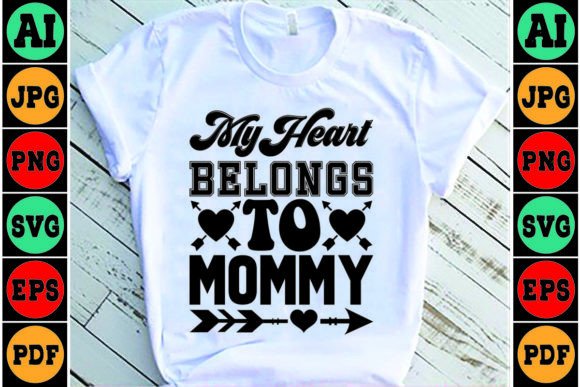
My Heart Belongs to Mommy Mom SVG Design
A Designer’s First Glance: Sweetness Without the Sugary Clutter
When I first opened My Heart Belongs to Mommy Mom SVG Design, I knew exactly where it belonged. Not in a forgotten downloads folder, but front and center on a handmade Mother’s Day tote, a tiny baby onesie, or a boutique apron that makes a mom tear up a little. The mood is warm, sentimental, and instantly readable, qualities that separate a profitable embroidery asset from a cute graphic that never sees a needle and thread.
Shape and layout are the first things an embroidery designer checks. This one holds a clean, balanced composition. The lettering doesn’t fight for attention with decorative elements, something I appreciate because it means fewer editing headaches before digitizing. The visual personality feels like a handwritten love note combined with a polished typographic finish. It’s direct, emotionally honest, and versatile enough to sit on a crisp linen pillow cover or a playful kitchen towel without losing its heart.
Where the Design Really Comes to Life on Fabric
I mentally test every design on a project I know will sell. For this one, I pictured a creamy cotton tote bag, a soft blush sweatshirt, and a tiny lap-shoulder baby tee. My Heart Belongs to Mommy Mom SVG Design thrives on those surfaces. On a tote bag, the message becomes a wearable statement of pride. On a sweatshirt, it turns an everyday garment into a personalized gift that feels boutique-bought. Baby embroidery is another natural fit. The scale works well for infant bodysuits, and the sentiment lands perfectly for baby shower last-minute orders or newborn photo props.
In my small shop, I’d also test this as an embroidered patch. The lettering is bold enough to hold up at reduced patch sizes, and the heart motif gives it that classic applique feel. A felt patch with satin-stitch borders around the text would stop customers scrolling on Etsy. I’d also slide it onto a chef-style apron for a mom who loves to cook, paired with a tiny whisk or floral accent. The design’s adaptability across these products is what makes it a workhorse for a craft business, not just a one-off seasonal asset.
Emotional Hook and Buyer Psychology
There’s a reason designs like this drive repeat sales. The phrase “My Heart Belongs to Mommy” carries a universal, non-trendy emotional pull. Moms buy it. Grandmas buy it. Partners buy it. The recognition factor is immediate, and when a customer sees it stitched out on a high-quality handmade product, trust climbs. You’re not just selling a tote bag. You’re selling a tiny, tangible reminder of a bond. That narrative amplifies perceived value, justifies a higher price point, and makes giftability effortless.
From a branding angle, My Heart Belongs to Mommy Mom SVG Design helps maintain a consistent, heartfelt aesthetic across multiple product listings. If you run a Crafts shop heavy on sentimental personalized goods, this design becomes a core member of your graphics library. It doesn’t scream “template,” it whispers “thoughtful,” and that’s the sweet spot for customer engagement.
Real Stitchability: What the Graphic Tells a Digitizer
When I evaluate a design strictly for embroidery readiness, I look at line weight, letter spacing, and potential for dense stitch buildup. The typography here is clean. No ultra-thin serifs that shrink into running-stitch chaos, no tiny floating elements that get lost in fabric texture. Lettering has enough breathing room to survive a fill stitch conversion, and the heart motif can be handled as a satin-stitch applique or a solid fill, depending on the final look you want.
I would digitize this with a medium stitch density, leaning slightly lighter on the fill to avoid puckering on soft cotton or knit fabrics. The running stitch underlay matters. A light edge-run underlay before the satin borders will keep the heart crisp and prevent the “wobbly edge” that cheapens a finished product. If you’re using this as an applique design, you’ll find the heart shape forgiving and easy to position, no weird angles to wrestle with.
Where to Pause and Test Before You List
Not every product is a safe home for this design. I’d be cautious with extremely small hoop sizes. If you try to jam the lettering under a 2-inch hoop, the counting loops and e’s might close up during stitching, turning “Mommy” into a smudged blob. Test on scrap fabric at 100% scale, then at 80%, and be honest if the legibility crumbles. On textured fabrics like waffle weave or terry cloth, the small details in the lettering could also get swallowed. A heavy stabilizer and a topper can fix that, but expect a few test runs.
Stretchy fabrics like ribbed knits or thin jersey need extra care. Hoop with a cutaway stabilizer, and don’t let the design pull too tight. The emotional softness of the design shouldn’t be undermined by distorted stitching. Also, watch out for dark fabrics where the default thread colors might not pop. I always test the design in black and white on screen first, then do a quick thread color swap to see if the contrast holds. A simple color change from a soft pink to a vibrant coral or even a metallic gold thread can transform the mood entirely.
Perfecting the Presentation: Mockups and Digital Assets
One of the smartest things about this product bundle is how it includes not just the vector files but also high-quality mockups and transparent backgrounds. For an Etsy seller or digital product seller, the printable mockup options are a sales magnet. I’d use the PNG files with transparent backgrounds to layer the design onto a real tote bag photo, a flat-lay sweatshirt, or a nursery pillow. That instant visual context helps buyers see the finished product before they add to cart. The AI and EPS formats give you the flexibility to tweak colors, scale, and even combine the design with other elements without losing resolution. The 300 dpi JPG and PDF versions are perfect for print-on-demand shops or sublimation hybrid products.
Because the design is fully editable and color changeable, you can quickly adapt it for seasonal collections. Pastel pinks for spring, deep burgundy for fall, or a crisp navy for a dad’s version? The versatility cuts down on design time and makes your Graphics library stretch further across multiple product lines.
Thread, Stabilizer, and the Tiny Details That Matter
In my embroidery room, I’d stitch this with a 40-weight polyester thread for a soft sheen. Rayon works too, especially for baby items, but polyester holds up better against frequent washing. Thread colors aren’t set in stone. The heart can be a classic red, but I’ve also tested it in a mauve, a dusty rose, and even a variegated thread that fades from pink to cream. The lettering in a dark charcoal or espresso brown adds a vintage touch that sells well on kitchen towels and aprons.
Stabilizer choice is project-dependent. For a tote bag, a medium-weight cutaway prevents shifting. For a thin baby onesie, I’d use a no-show mesh fusible stabilizer and a water-soluble topper to keep the stitches from sinking. The design’s overall stitch count will be manageable, not a dense jacket-back design that turns lightweight fabric into cardboard. That’s a huge plus for wearable items where comfort matters.
Commercial Use and the Fine Print
Before you stitch this onto a product for sale, confirm the licensing details. The description mentions editable files and a complete mockup bundle, but it doesn’t explicitly state commercial embroidery rights. I always reach out and ask: “Can I use this design on physical items I sell, such as tote bags, apparel, and patches?” and “Are there any restrictions on altering the design for different colorways or pairing it with other elements?” A clear answer before you invest in thread and blanks saves costly takedowns.
Also, remember that this is a graphic design, not a pre-digitized embroidery file. You’ll need to convert it to a machine embroidery format like PES, DST, EXP, or JEF using digitizing software. The SVG and EPS files are a great starting point because they scale without losing quality, but you still need to add stitch types, underlay, and pull compensation. If you’re not comfortable digitizing, partner with a professional digitizer and provide them the clean vector files. You’ll get a much better stitch-out than auto-digitizing results.
Final Verdict for Embroidery Pros and Craft Entrepreneurs
I don’t review designs based on how pretty they look on a screen. I judge them on how they stitch, how they sell, and how they make a customer feel when they hold the finished product. My Heart Belongs to Mommy Mom SVG Design passes all three tests. It’s a genuine, warm, and visually balanced asset that translates beautifully into machine embroidery, custom apparel, and handmade gift lines. With a little digitizing care and smart product pairings, you’ll turn this graphic into a reliable bestseller that keeps your craft business booked through Mother’s Day and beyond.